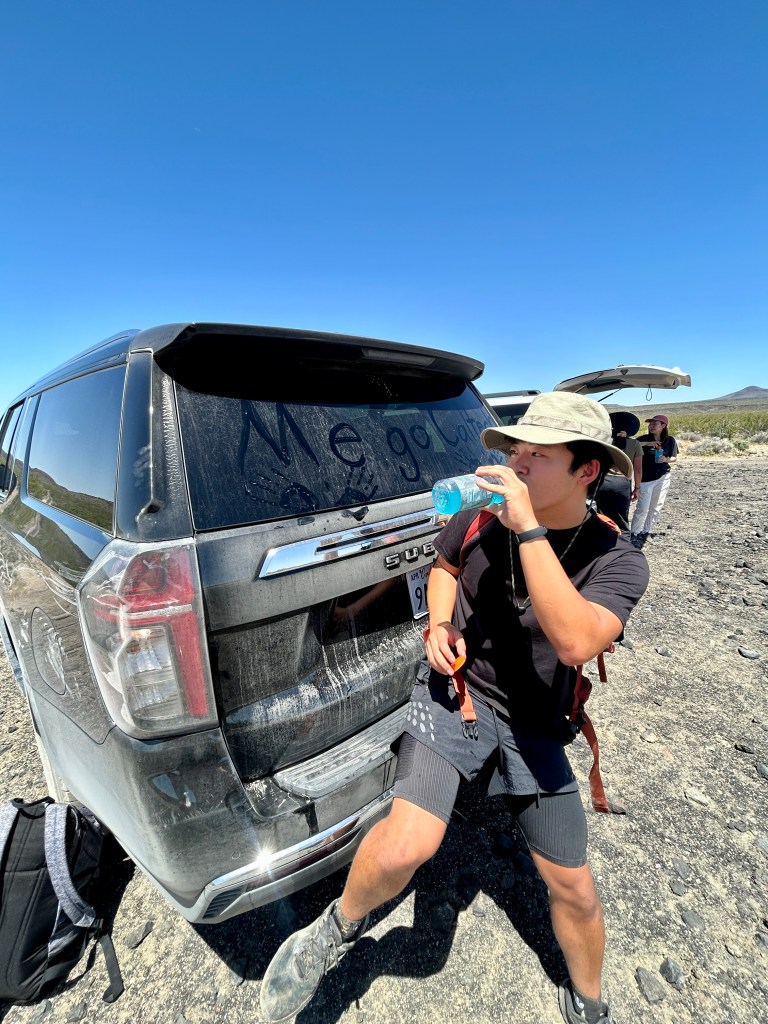
Our scientific field trip to the Mojave Desert provided an opportunity to observe and analyze the diverse geological formations found within this arid ecosystem. We embarked on this expedition with the aim of expanding our understanding of the geological processes and their implications for the region’s landscape.
Kelso Dunes offered a remarkable setting to study aeolian processes. The sand dunes, characterized by their golden color and intricate wind-generated patterns, provided evidence of ongoing geomorphological changes. We measured wind speed, direction, and sand particle sizes to examine the dynamics shaping the dunes. The ascent to the dune crest provided insights into the formation of slip faces and the influence of wind regime on sediment transport.
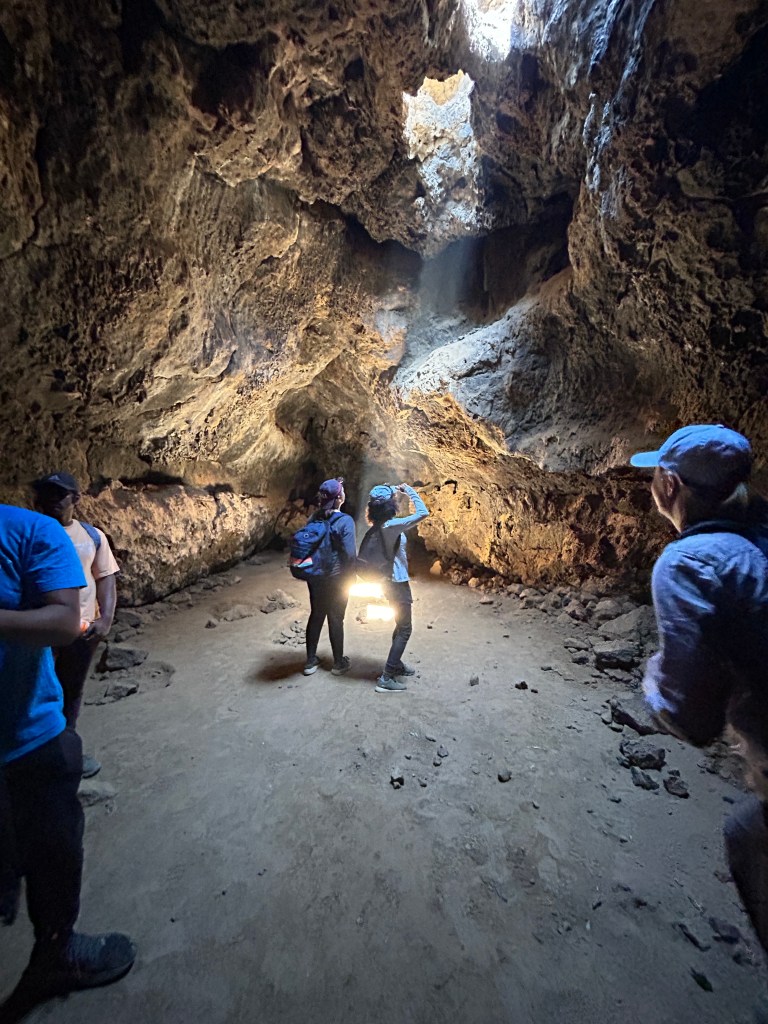
Our exploration of the Lava Tube, a subterranean lava cave, presented an opportunity to investigate volcanic activity and associated rock formations. Within the cave, we documented the mineralogy, structure, and weathering patterns of the basaltic lava flows. The presence of stalactites and stalagmites indicated the slow deposition of mineral-rich water over time. We collected samples for further laboratory analysis to determine the precise composition and age of the lava flows.
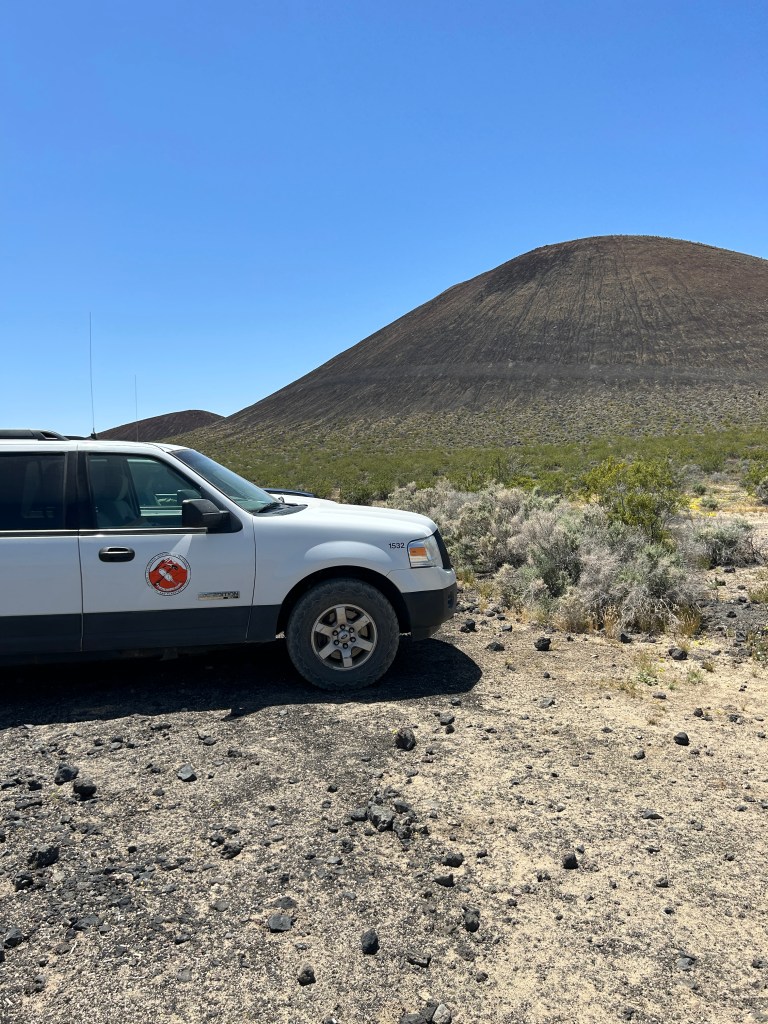
Pisgah Volcano, a dormant cinder cone, allowed us to examine the volcanic history of the Mojave Desert. We surveyed the cone’s morphology, identifying primary and secondary volcanic features. Our measurements and observations aimed to elucidate the volcanic eruption sequence, including lava flow extent, ash distribution, and pyroclastic material characteristics. We analyzed soil samples to understand the volcano’s impact on the local ecosystem and the potential for future volcanic activity.

 Brayden Noh